WDFW Floodplain Worksite
Work at the Sugar worksite will begin July 6th and will continue through August. During this time the Cottonwood trails will be closed.
Where is this project?
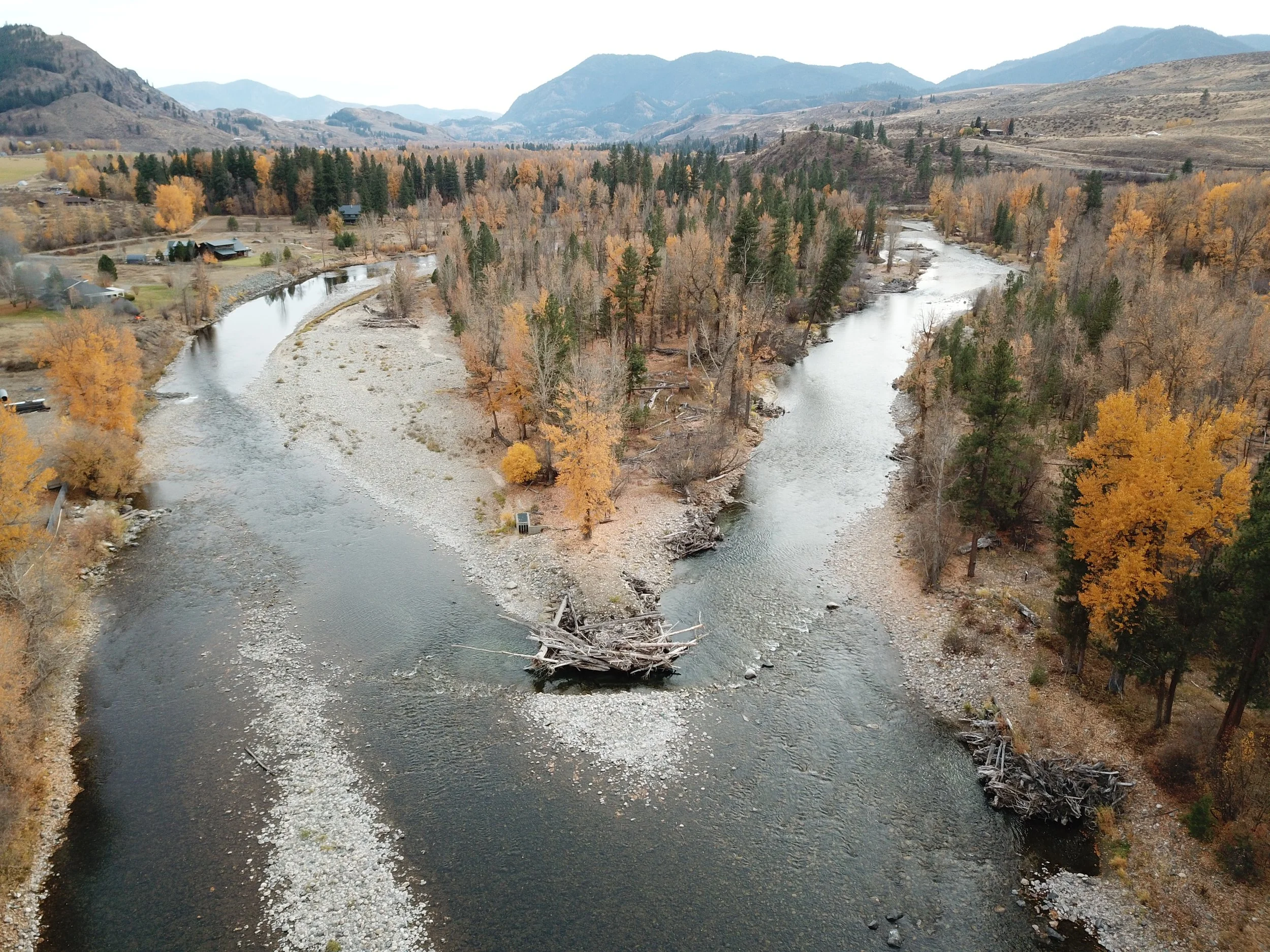
The M2 WDFW Floodplain Phase II Project is an upstream continuation of the larger Sugar-Reach Restoration and is located on the Methow River near the Methow Valley State Airport between the towns of Twisp and Winthrop.
Why is this project being constructed?
Historically, the river migrated side to side across the entire valley floor, and the alignment of the river was continuously changing. This movement would create important habitat for salmon, including floodplain areas, side channels and wood accumulations. Restoring habitat for steelhead and spring Chinook within the Methow River between Twisp and Winthrop has been identified as a high priority in the Upper Columbia Biological Strategy.
The project will address the highest priority ecological concerns identified within the reach including:
Increased quantity and availability of floodplain and side channel habitats
Increase instream channel complexity
Increase the quantity of native riparian buffer
Reduce impact of anthropogenic barriers
What will this project do to address ecological concerns and improve fish habitat?
Wood habitat structures, willow plantings, instream bar grading, and removal of an old concrete fish ladder will serve to improve stream health and increase critical habitat for key native species, such as Spring Chinook and Steelhead.
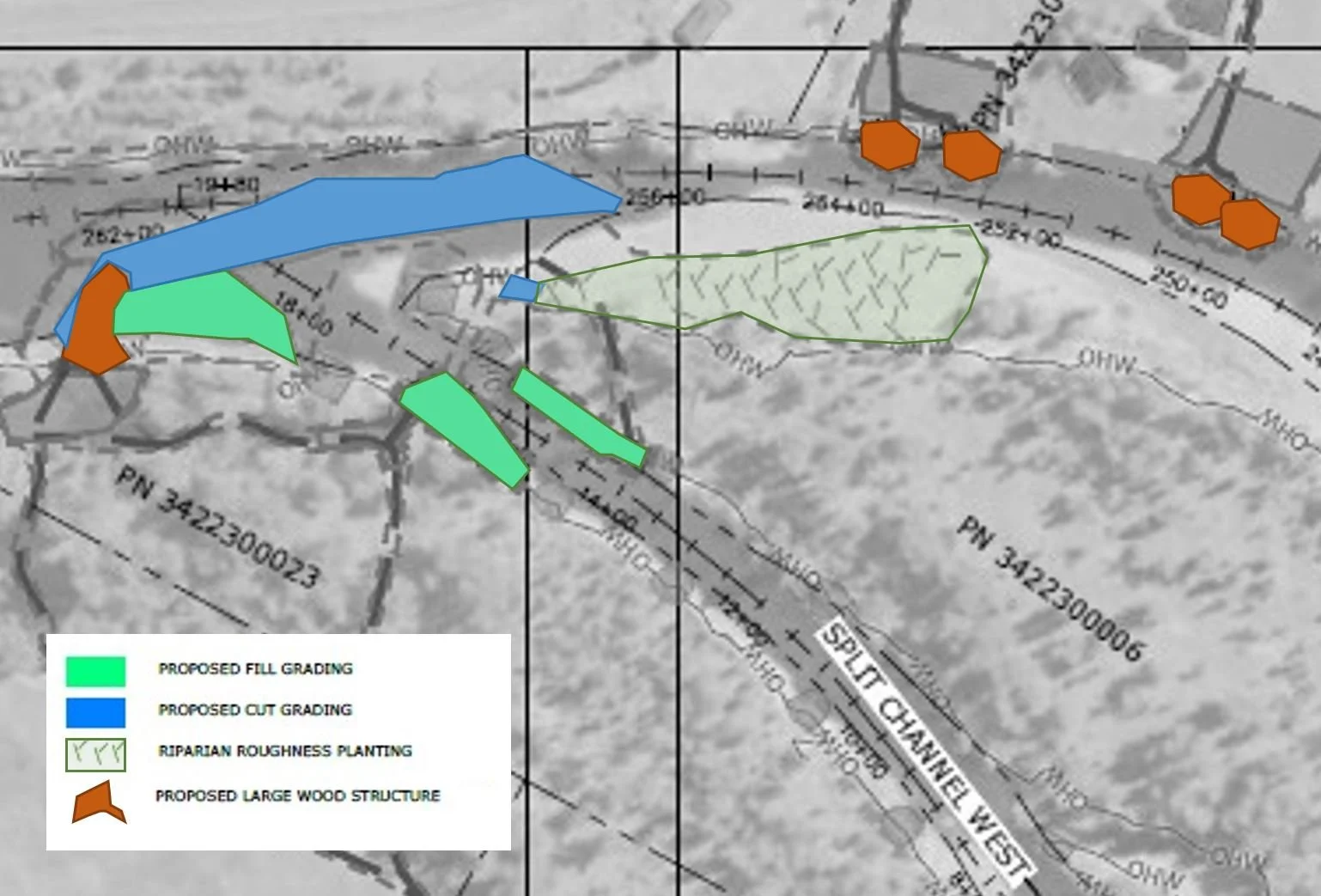
Overview of Project Work at WDFW Floodplain worksite
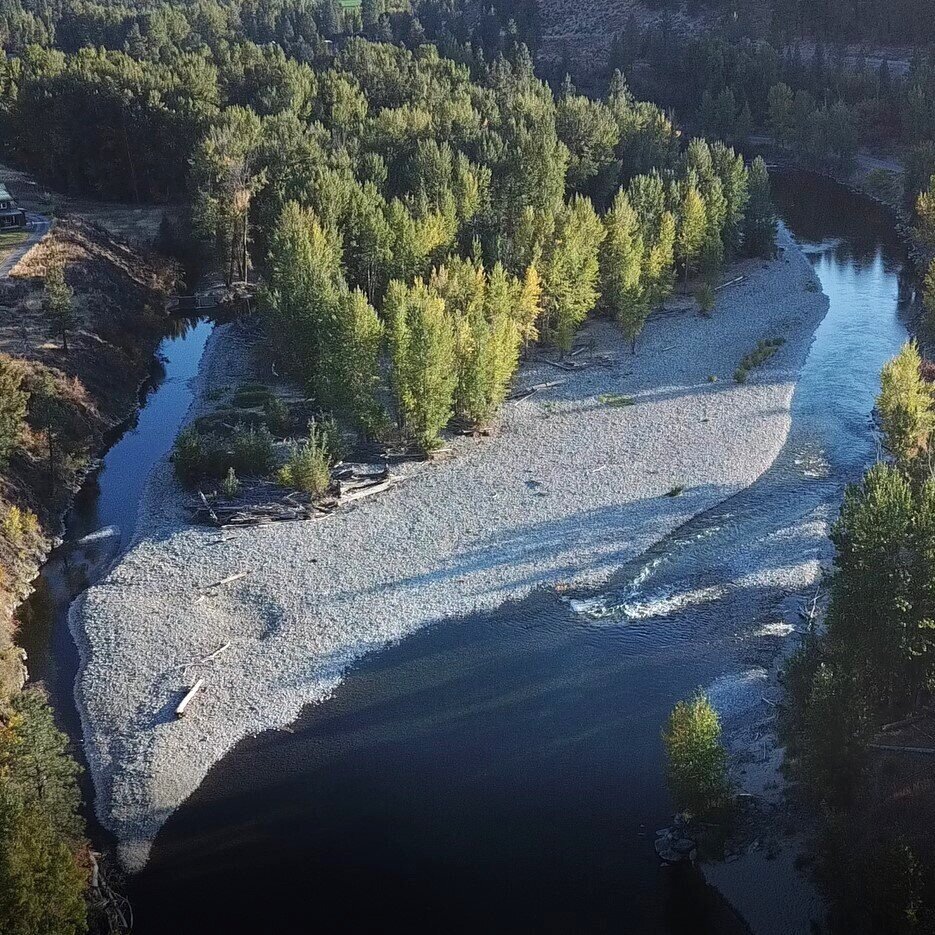
Channel Grading to Support Year-round flow on both sides of island
An existing mid-channel gravel bar will be lower to help balance flow between the two channels on either side of the island. This will provide year-round habitat for fish in both channels. It will also ensure the fish return from the adjacent MVID/Barkley irrigation diversion connects with a wetted channel during low water in summer and fall.
Engineered logjams to increase complexity
Four log habitat structures will be built downstream of the irrigation fish return on the east bank of the river, and one on the west bank upstream of the island. These structures are designed to provide all the benefits of natural log jams, but with greater structural integrity and safety for river recreationists.
Planting of native riparian species
Willow plantings on gravel bar across from fish return will serve to establish riparian vegetation on a seasonally active river bar. Vegetated gravel bars provide places for small fish to hide and grow during high flow periods when the main flow of the river is too fast. This vegetation also supports aquatic food webs and water quality.
REMOVAL of instream concrete
A derelict concrete fish ladder, located on the upper end of the island, will be removed. This concrete is the last remnants of an old channel spanning dam.
When will this project be constructed?
Work at the WDFW Floodplain worksite will be completed in Summer 2026. Final clean up and plantings will be completed in Fall 2026.
Generally, work within the Methow River is limited to the month of July in each year to protect fish species, but special exemptions will allow this work in late summer and early fall to take advantage of low flow conditions.
Who is doing this project?
This project was developed by the Methow Salmon Recovery Foundation in coordination with a multi-agency Project Development Team, landowners and project partners. Bureau of Reclamation provided funding and technical support for project design. Project construction will be funded by WA Conservation Office Salmon Recovery Funding Board.
Pipkin Construction, a crew based out of Wenatchee will construction the project. Methow Salmon has contracted with Pipkin Construction to complete work west of the river. Plantings will be completed by Methow Natives, a restoration expert and local supplier of native plants. Methow Salmon prioritizes working with local and regional contractors. Contractors are encouraged to contact us to be placed on our contractor list.
Learn about other Salmon Habitat Projects


Solutions with Lasting Value